
 Business License

Belt Scale vs Weighing Feeder: Which One Do You Need for Bulk Material Handling
A plant that buys a weighing feeder when it really needed a belt scale, or the other way around, often does not notice the mismatch until the numbers stop making sense. One instrument reports what is moving, while the other controls how much moves. Confusing them leads to either a measurement that cannot control anything or a controller that cannot account for what it delivered.
This is a common point of uncertainty for engineers specifying bulk handling equipment. The two devices share load cells and an integrator, so they look alike on paper, but their jobs are fundamentally different.
This guide lays out the difference, compares the two across the factors that matter, and gives you a straightforward way to decide which one fits your process. By the end you will be able to name your requirement in a single sentence.
1. Two Instruments That Share Parts but Serve Different Purposes
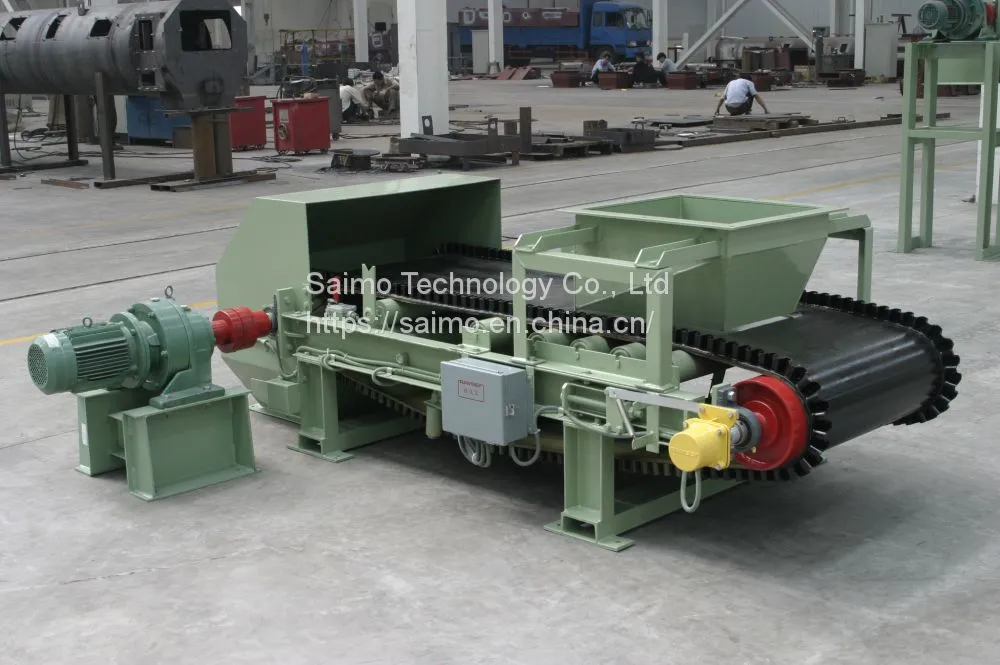
Both a belt scale and a weighing feeder use a belt, a weigh frame, load cells, and an integrator. That shared hardware is exactly why the two get mixed up. The distinction is not in the components but in what the belt is doing.
A belt scale rides on an existing conveyor and measures whatever happens to be on it. A weighing feeder includes its own short conveyor and a drive, and it actively delivers a set amount of material per unit of time. One observes a stream; the other produces a stream.
Saimo Technology Co Ltd manufactures both types, which is helpful because the right answer is not always obvious and a supplier who makes both can compare them without a bias toward either.
2. What a Belt Scale Is Designed to Do
A belt scale measures the flow rate and total of material carried by a conveyor that already exists in your process. It does not move material itself and it does not change the rate. Its output is a measurement you can use for inventory, reconciliation, or commercial billing.
The instrument is passive in a positive sense. It samples the load on the weigh span and the belt speed, then totalizes. Because it does not have to drive anything, it can be fitted to conveyors of almost any width or capacity, from a small aggregate line up to a mine or port main conveyor.
Typical belt speeds on these installations range from roughly 0.5 to 5 metres per second, with flow rates from a few tonnes to several thousand tonnes per hour. The belt scale simply keeps score as the process runs at whatever rate the plant chooses.
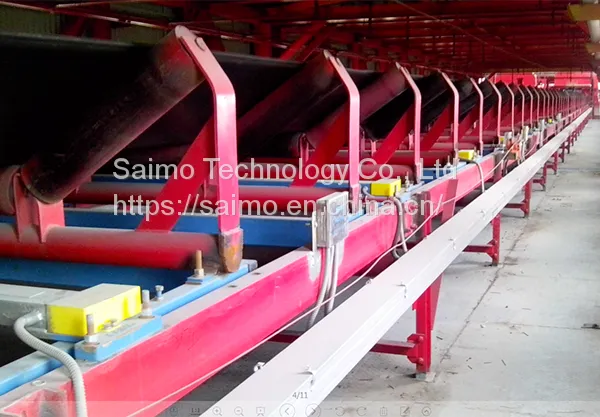
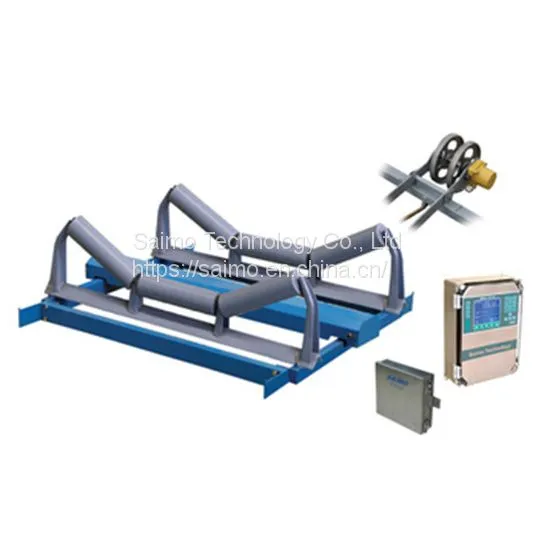
Because the scale adds no moving machine of its own, it is also the easier retrofit. A weigh frame, load cells, a speed sensor, and an integrator can be mounted to a conveyor that has run for years, often during a scheduled shutdown. That low disruption is one reason belt scales are the default choice for existing lines.
3. What a Weighing Feeder Is Designed to Do
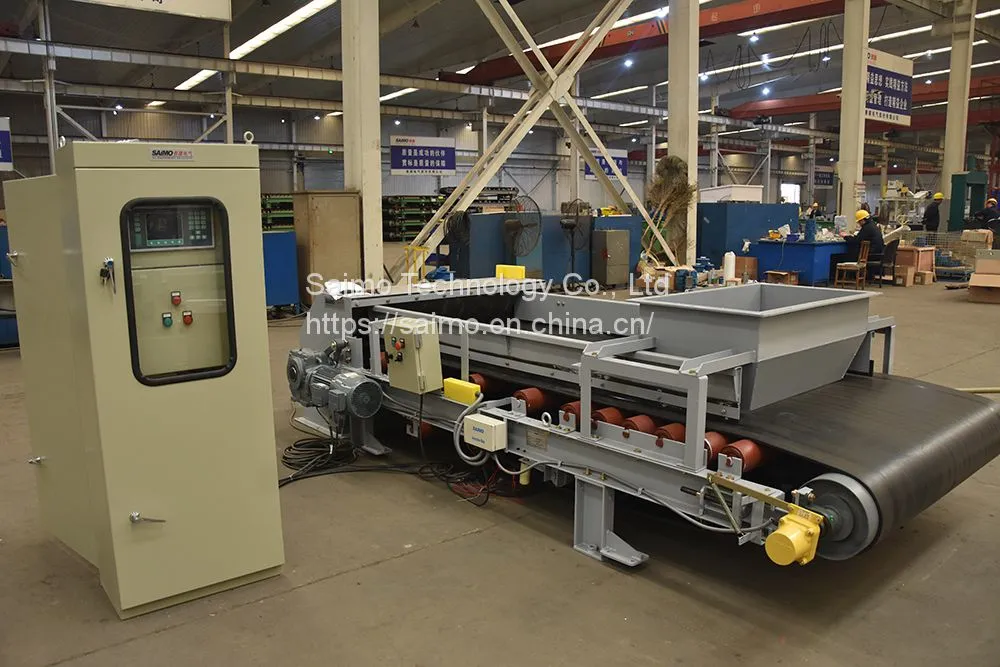
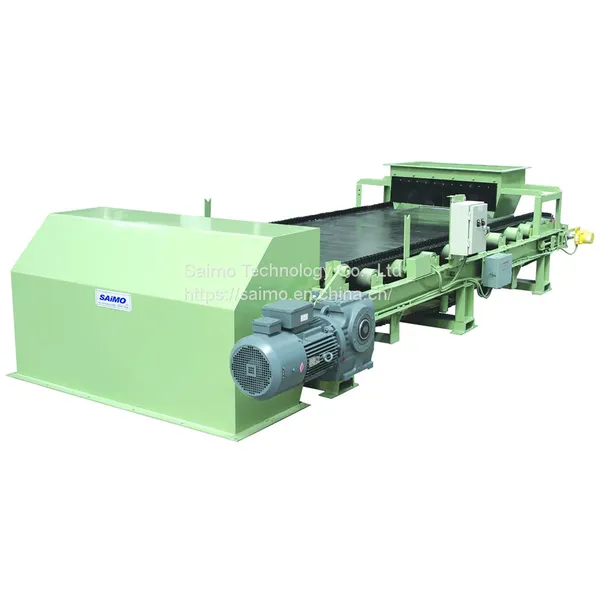
A weighing feeder, sometimes called a weigh belt feeder, is a complete feeding machine. It has a short belt driven by a motor, and it controls that motor so the material discharges at a precise rate. The weighing part measures the load, and the control part adjusts belt speed to hit a setpoint.
This closed-loop behavior is the key distinction. When the load on the belt changes, the controller speeds up or slows down the belt to hold the delivery rate steady. The result is a controlled, measurable flow into a downstream process such as a mixer, kiln, or boiler.
Weighing feeders typically handle a narrower capacity range than large belt scales because the feeder must physically meter the material. They are common in batching, blending, and continuous dosing where the rate, not just the total, must be held within a tight band.
The built-in drive is what makes the closed loop possible. A variable-frequency drive adjusts belt speed in response to the measured load, so the discharge rate stays close to the setpoint even as the material bulk density or the feed hopper level changes. This self-correction is the core value a weighing feeder delivers.
4. The Core Difference: Measurement vs Control
The single clearest way to separate the two is to ask whether the device must influence the flow. If the answer is no, and you only need to know how much moved, you are describing a belt scale. If the answer is yes, and the device must hold a delivery rate, you are describing a weighing feeder.
That one question resolves most specification confusion. The rest of the decision comes down to accuracy, cost, and how the instrument integrates with your existing process equipment.
The table below summarizes the main points side by side so the distinction stays clear as you read the sections that follow.
| Factor | Belt Scale | Weighing Feeder |
|---|---|---|
| Primary job | Measure flow and total | Control delivery rate |
| Conveyor | Existing process conveyor | Built-in short belt with drive |
| Influences flow | No | Yes, closed-loop speed control |
| Typical output | t/h and accumulated tonnes | Setpoint rate held to target |
| Typical fit | Inventory, billing, monitoring | Dosing, batching, blending |
5. How They Compare on Accuracy and Cost
Accuracy expectations differ because the tasks differ. A belt scale is usually judged on totalizer accuracy over a shift or a shipment, commonly within roughly 0.5% to 1% depending on the class and installation. A weighing feeder is judged on how tightly it holds an instantaneous rate, and control stability is often more important than a single total figure.
Cost follows complexity. A belt scale is generally the less expensive option because it adds instrumentation to a conveyor that already exists. A weighing feeder is a self-contained machine with its own structure, drive, and control loop, so it carries a higher price and a larger footprint.
That said, the total cost of ownership depends on the application. Using a belt scale where active metering is required will force you to add a separate feeder anyway, while a weighing feeder used only for monitoring is an unnecessary expense.
Saimo has seen this mismatch play out in both directions, and the lesson is consistent: the cheapest route is the instrument that matches the process need, not the one with the lower purchase price. Matching first, then comparing prices, avoids the retrofit that follows a wrong initial choice.
There is also a middle ground worth knowing about. A belt scale can be paired with a variable-speed conveyor to form a control loop, where the scale reports the rate and the conveyor adjusts speed to hit a target. This combination can meter material without a dedicated feeder, though it is usually limited by conveyor size and response time. It is not a direct substitute for a weighing feeder in tight dosing applications, but it fills a gap in coarse rate control.
6. When a Belt Scale Is the Right Choice
Choose a belt scale when the material is already moving on a conveyor and you need a defensible total. Reconciliation of purchased fuel against consumption, invoicing for transferred material, and month-end inventory are classic cases.
It is also the right tool when the conveyor is large or shared. A single belt scale on a main transfer conveyor can capture the combined output of several upstream sources, which would be impractical to meter individually with feeders.
Process monitoring is another fit. If you want to know that a conveyor is running at the expected rate so you can spot blockages or drift, a belt scale gives you that visibility without altering the process.
Shared conveyors are worth repeating because the economics are compelling. A plant with several small hoppers feeding one main belt can weigh everything with a single scale at a transfer point, rather than buying a feeder for every stream. The scale answers "how much total" at a fraction of the equipment count.
7. When a Weighing Feeder Is the Right Choice
Choose a weighing feeder when a downstream process needs material delivered at a controlled rate. Continuous dosing into a mixer, kiln feed, or combustion system is the textbook case. The feeder becomes the metering element that the rest of the process depends on.
Batching and blending also favor the feeder. When several ingredients must combine in a fixed ratio, each stream is metered by its own feeder so the blend stays on specification. A belt scale cannot enforce a ratio because it has no authority over the flow.
Accuracy-sensitive feeding is another signal. If a recipe requires, say, a limestone addition held to a narrow band, a weighing feeder with closed-loop control is the instrument that can hold that band under changing material conditions.
Start-stop batching is a slightly different but common use. In a batch process the feeder runs until a target weight is reached, then stops. The same machine that meters continuously can deliver a precise batch by totalizing its own discharge, which makes the weighing feeder valuable in both continuous and batch-style plants.
8. Two Field Examples
The choice becomes concrete when you look at how the two instruments are deployed in practice. The examples below describe typical situations rather than any single named facility.
In the first case, a power plant needed to track coal arriving on an inbound conveyor to reconcile supplier invoices. The coal was already moving at a high rate, and the plant had no need to control that flow. A multi-idler belt scale was fitted to the existing conveyor, and the plant began pulling a totalizer figure that matched weighbridge records closely enough to settle disputes. The investment was limited because no new material-handling machine was required.
A second, smaller example involved a feed mill blending several ingredients into a continuous ration. Here each ingredient had to enter the mixer at its own controlled rate, so the mill installed weighing feeders on the individual streams. The feeders held each ratio within specification, and the mill attributed the resulting batch consistency directly to the closed-loop control.
9. A Simple Decision Checklist
When the two options are in front of you, a few yes-or-no questions will point to the answer. They are deliberately simple because the underlying difference is simple.
First, does your process already move the material on a conveyor you can instrument? If yes, and you only need a total, a belt scale is likely sufficient. Second, does a downstream process require a specific delivery rate that must be held automatically? If yes, you need a weighing feeder.
Third, is the material split into multiple streams that must keep a fixed ratio? That is a feeding problem, not a measuring problem. Saimo Technology can review the process details with you and confirm which instrument matches, since a wrong choice here is expensive to correct after installation.
If the answer to any question is unclear, that is itself useful information. It usually means the process requirement has not been written down yet. The company helps customers turn a fuzzy need into a clear specification, because the decision between a belt scale and a weighing feeder should rest on the process, not on guesswork.
10. Frequently Asked Questions
10.1 Can a belt scale control the feed rate?
No. A belt scale only measures flow and total; it has no drive and no authority over belt speed. To control a rate you need a weighing feeder, or a belt scale combined with a separate variable-speed feeder and a control loop. In that combined arrangement the scale provides the feedback signal, but the scale itself is not the controlling element.
10.2 Is a weighing feeder more accurate than a belt scale?
They are accurate in different senses. A weighing feeder holds an instantaneous delivery rate to a tight band through closed-loop control, while a belt scale totalizes material on an existing conveyor, often to within roughly 0.5% to 1%. Which one seems more accurate depends on whether your process cares about a steady rate or an accurate cumulative total.
10.3 Do I need both instruments in one process?
Often yes, in different locations. A plant might use weighing feeders to meter ingredients into a process and a belt scale on a transfer conveyor to totalize the combined flow for inventory. They are complementary rather than competing. The decision is made location by location based on whether each point must measure or must control.
10.4 Which option costs less to install?
A belt scale is generally the lower-cost option because it instruments an existing conveyor and adds no new material-handling machine. A weighing feeder is a self-contained machine with its own belt, drive, and controller, so it costs more and takes more space. The right comparison is against the process need, since buying the cheaper instrument for the wrong job costs more in the end.
Recently Posted
-
Saimo Technology: A 30-Year Journey in Bulk Material Weighing
September 1, 2026Behind every bulk handling operation that runs on trustworthy numbers is a company that spent decades learning how to produce thos Read More
 -
Coal Weighing Feeders in Power Plants: How Fuel Feed Control Keeps Combustion on Target
September 1, 2026In a coal-fired power plant, the journey from bunker to burner begins with a single piece of equipment that decides how much fuel Read More
 -
Belt Scale Accuracy Standards: OIML R50 and What the Classes Really Mean
August 31, 2026A purchaser who asks for "a 0.5% belt scale" without stating the standard is comparing prices against a number that has Read More
 -
How to Choose a Coal Weighing Feeder: A Buyer's Guide for Reliable Fuel Metering
August 28, 2026A coal feeder that meters fuel at the wrong rate does not announce itself with a loud failure. It delivers a slightly lean or rich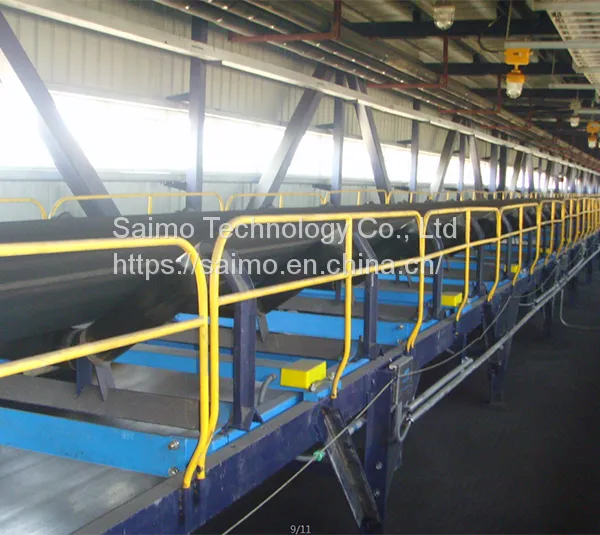 Read More

Contact Us
Recommended Products
-
 SAIMO Automatic Train Sampler Auger Sampling Systems Coal SamplesNegotiableMOQ: 1 Combo
 -
Saimo's Model S70 Sweep Type Sampling Machine Sampling SystemNegotiableMOQ: 1 Set
-
SAIMO Pressure-resistant Gravimetric Coal Feeder, Model F55NegotiableMOQ: 1 Piece
-
Saimo F52 Mid Range Weigh Belt Feeder System Weighing FeederNegotiableMOQ: 1 Piece
-
Saimo Feeder Controller Weighing Controllers 6105/6105B FH-02-6000PNegotiableMOQ: 1 Piece
-
SAIMO Electronic PLR20-2D-J PL20 Safety Pull Switches Conveyor ProtectionsNegotiableMOQ: 1 Piece
-
SAIMO Electronic Belt Misalignment Switch ROS-2D-FM RUN OFF SWITCHES EXtaIIICNegotiableMOQ: 1 Piece
-
Saimo 6301 Belt Scale Integrator 6301D Digitizer FH-03-6000FNegotiableMOQ: 1 Piece
-
Saimo Speed Detector PLR12R/PLR12RN/PLR12RS Speed SensorNegotiableMOQ: 1 Piece
-
Saimo Technology ICS-FH-2 Belt ScaleNegotiableMOQ: 1 Piece
-
SAIMO F57 Fluidized Bed Boiler Coal FeederNegotiableMOQ: 1 Combo
-
SAIMO Automatic Truck Sampler Auger Sampling Systems Coal SamplesNegotiableMOQ: 1 Combo
-
SAIMO F55 Pressure-Tolerant Weighing Coal FeederNegotiableMOQ: 1 Combo
-
Saimo Feeder Controller Belt Integrator6001/6001B FH-10-6000FNegotiableMOQ: 1 Piece
-
Saimo Technology PL50 Belt Damage Detector PLR50NegotiableMOQ: 1 Piece
-
Saimo's Auger Type Sampling Systems AUGER SAMPLING SYSTEM FOR TRUCKNegotiableMOQ: 1 Set
-
Saimo's Model S76 Sampling UnitNegotiableMOQ: 1 Set
-
SAIMO ICS-FH-16 High Precision Belt ScaleNegotiableMOQ: 1 Combo
-
Saimo 6101 Belt Scale Integrator 6000 Integrator FH-10T-6000FNegotiableMOQ: 1 Piece
-
Saimo Technology Tilt Switch Probe Model PLR30M-FM EXta IIICNegotiableMOQ: 1 Piece