
 Business License

How to Choose a Coal Weighing Feeder: A Buyer's Guide for Reliable Fuel Metering
A coal feeder that meters fuel at the wrong rate does not announce itself with a loud failure. It delivers a slightly lean or rich feed, and the boiler or kiln compensates quietly until efficiency and emissions drift out of tolerance. By the time the problem is visible in a monthly fuel report, weeks of suboptimal combustion have already passed.
If you are responsible for specifying a coal weighing feeder, the pressure is to get it right the first time, because the feeder sits at the front of a combustion process that everything downstream depends on.
This guide walks through the factors that actually determine whether a coal weighing feeder performs. You will learn which specifications matter, how duty and environment shape the choice, and what to confirm with a supplier before you commit.
1. Start With the Fuel You Actually Burn
Coal is not one material. It varies in moisture, size, and bulk density, and those variations change how a feeder behaves. A feeder sized for a dry, free-flowing coal may struggle when the same plant switches to a wet, sticky fuel with a higher moisture content.
Start by documenting your fuel range rather than a single number. Note the typical moisture range, the maximum particle size, and the bulk density band. These three values drive the feeder geometry, the belt speed, and the hopper design.
Saimo Technology Co Ltd asks these questions early because a feeder built around a real fuel range performs far better than one built around an idealized fuel. If your fuel supply changes seasonally, the feeder and its control logic should tolerate that swing.
It also helps to know where the coal enters the feeder. A feeder fed from a surge hopper behaves differently from one fed by a metering bin, and the incoming material pressure affects how evenly the belt loads. Describing the upstream arrangement gives the supplier the context needed to size the inlet and the weigh span correctly.
2. Define the Required Feed Rate Range
The feed rate is the first hard specification. You need a minimum and maximum delivery rate, usually expressed in tonnes per hour, that the feeder must hold. A feeder sized only for the maximum can lose control accuracy at the low end of its range, so the turndown ratio matters.
Turndown is the ratio between the highest and lowest controlled rate. A feeder with a wide turndown can serve a boiler that runs at partial load, while a narrow-turndown feeder may struggle when demand drops. Confirm that your typical operating range sits comfortably inside the feeder's controlled span.
Coal feeders in power and process plants commonly operate anywhere from a few tonnes per hour up to well over a hundred, depending on boiler size. The point is not the exact industry figure but that you specify the band your own process needs.
When you define the range, leave margin at both ends. Sizing a feeder to run near its maximum in normal operation gives no headroom for a boiler upset or a fuel change. A feeder that runs comfortably in the middle of its range, typically between roughly 30% and 80% of full scale, holds accuracy most reliably and lasts longer.
3. Understand Accuracy and Repeatability Claims
Suppliers quote accuracy in different ways, which can make comparisons confusing. Some state a percentage of the set rate, others a percentage of full scale, and still others a percentage of the actual delivered total. These are not the same number.
Ask for the accuracy as a percentage of the actual feed rate over your intended range, and ask whether it is maintained at low rates. A figure quoted at full scale says little about performance at 30% load, which is where many plants spend a large share of their operating hours.
Repeatability matters as much as absolute accuracy. A coal weighing feeder that is consistently off by a small amount can be corrected, but one that drifts unpredictably cannot. A stable, repeatable feeder is the better long-term asset for combustion control.
Ask about calibration too, because the claimed accuracy only exists if the feeder can be checked and corrected. Reference-weight calibration is the practical method for coal feeders, and a design that makes those weights easy to apply will get recalibrated on schedule. A feeder that is awkward to calibrate tends to fall out of tolerance quietly.
4. Match the Feeder to the Duty Cycle
Duty cycle shapes the mechanical design more than most buyers expect. A feeder that runs continuously at a steady rate faces different wear than one that starts and stops many times a day, and each pattern stresses different components.
Continuous duty favors robust bearings, a belt selected for long life, and a drive rated for uninterrupted operation. Frequent start-stop duty favors a drive and control loop that ramp smoothly without overshooting the setpoint, because each start is an opportunity for error.
Describe your operating pattern honestly when you specify. The supplier uses that information to choose belt materials, drive sizing, and control tuning that match how the machine will actually run rather than a theoretical steady state.
5. Consider the Environment and Hazardous Areas
Coal handling environments are dusty and often carry a combustible-dust risk. The feeder's electrical components, motors, and wiring may need to meet hazardous-area classification if the installation is inside a classified zone.
Confirm the area classification with your plant's safety documentation, then match the feeder to it. This affects motor enclosures, junction boxes, and any sensors. Retrofitting a feeder that was not specified for the zone is expensive and sometimes impossible.
Dust ingress is a separate, practical concern. A feeder with sealed load cells and a well-protected belt path will hold calibration longer in a coal environment than an open design. Long-term accuracy in coal handling is as much about keeping dust out as it is about the electronics.
Temperature extremes also deserve attention, particularly for the load cells and the integrator. Load cells drift slightly with temperature, and a feeder installed where ambient conditions swing widely needs cells and electronics rated for that range. If the feeder sits outdoors or in an unheated enclosure, say so during specification.
6. Review the Feeder's Control and Integration
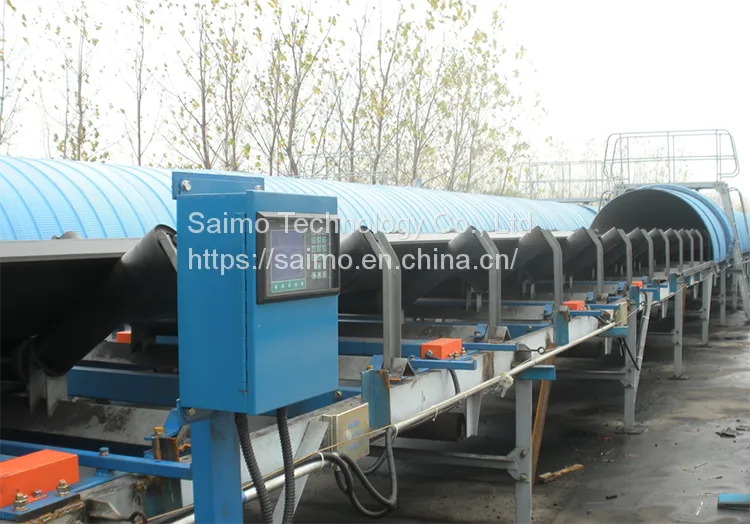
The feeder must talk to your plant's control system. Whether it is a standalone integrator, a PLC interface, or a distributed control system link, the handshake should be planned before purchase, not after delivery.
Consider what signals you need in both directions. The feeder should accept a remote setpoint and report the actual rate and total back to the control room. Some plants also want a speed signal, alarms for belt slip or blockage, and a totalizer pulse for accounting.
The table below lists the control signals commonly required, so you can check them against your own integration plan.
| Signal | Direction | Purpose |
|---|---|---|
| Remote setpoint | Control system to feeder | Command the target feed rate |
| Actual rate feedback | Feeder to control system | Confirm delivered rate |
| Accumulated total | Feeder to control system | Fuel accounting and reconciliation |
| Belt slip / blockage alarm | Feeder to control system | Detect feed faults early |
| Run / fault status | Feeder to control system | Interlock and safety logic |
7. Evaluate Maintenance Access and Spare Parts
A coal weighing feeder is a mechanical machine that will need attention over its life. The belt wears, the idlers and bearings need service, and load cells eventually need recalibration or replacement. Design the purchase around that reality.
Look at how easily the belt can be changed and whether the weigh frame can be accessed without a major disassembly. A feeder that is cheap to buy but takes a full shift to re-belt will cost far more over ten years than a slightly more expensive design with good access.
Ask about spare parts availability and lead times before you buy. The company supplies feeders with a defined parts list, and knowing which wear items to hold in stock prevents a routine service from turning into an extended shutdown.
Belt life is the single most predictable cost driver. A coal feeder belt runs in an abrasive environment and will wear, so ask what the expected belt life is under your duty and how the belt is tracked. A feeder with good belt tracking and simple tensioning keeps the wear even and the replacement quick, which is what keeps long-term maintenance cost low.
8. Two Field Examples
The specification process is easier to picture when you see how real buyers have approached it. The examples below are representative of common situations rather than accounts of specific named plants.
In the first case, a coal-fired plant replacing an aging volumetric feeder needed a gravimetric unit that could hold a set rate across a wide load range because the boiler cycled daily. The team documented a turndown requirement and specified accuracy as a percentage of actual rate rather than full scale. After commissioning, the feeder held the rate steady enough that the plant saw a measurable improvement in combustion stability and a reduction in excess air corrections. The key decision was defining the low-load requirement up front instead of accepting a full-scale-only accuracy claim.
A second, smaller example involved a process plant burning a damp, sticky coal. The buyer focused on hopper geometry and belt cleaning because the fuel tended to build up. A feeder with a well-sealed frame and easy belt access was chosen, and the plant reported far less downtime for cleaning than with the unit it replaced.
9. Questions to Ask Before You Commit
Before signing an order, run through a short list of questions with the supplier. They are designed to surface the gaps that most often cause a feeder to underperform.
Ask how accuracy is defined and over what range it holds. Ask what turndown the feeder supports and whether your low-load point is inside it. Ask what the area classification is and confirm the equipment matches. Ask about belt change time and spare parts lead times.
Finally, ask for a duty description. Saimo Technology will work through these points with you, and a supplier who welcomes the questions is generally one who has specified enough coal feeders to know where the failures hide.
The most important single step is to document your requirements before comparing quotes. When the fuel range, feed rate band, accuracy definition, duty cycle, environment, and control interface are all written down, two suppliers can be compared on equal terms. Without that, a lower price often hides a smaller feeder, a narrower turndown, or a control interface you will have to pay to retrofit.
10. Frequently Asked Questions
10.1 What is the difference between a gravimetric and volumetric coal feeder?
A gravimetric feeder weighs the coal and controls the belt speed to deliver a set weight per unit of time, so it corrects for changes in fuel density. A volumetric feeder moves a set volume and does not weigh the material, so its delivered weight drifts as bulk density changes. For combustion control where fuel quality varies, the gravimetric coal weighing feeder is the standard choice.
10.2 What feed rate accuracy can I expect?
Accuracy is usually stated as a percentage of the actual feed rate over a defined range, and a well-specified coal weighing feeder can often hold roughly 1% or better within its controlled span. The figure depends on the feeder class, the fuel, and the installation. Always ask whether the quoted accuracy holds at low rates, since that is where many processes spend significant time.
10.3 Does a coal weighing feeder work with wet or sticky coal?
Yes, but the design must be matched to the fuel. Wet or sticky coal calls for attention to hopper geometry, belt cleaning, and a sealed weigh frame so buildup does not corrupt the measurement. If your fuel has a high or variable moisture content, state it clearly during specification so the supplier can select the right belt and material-handling features.
10.4 How is the feeder integrated with my plant control system?
Most coal weighing feeders accept a remote setpoint and report actual rate, accumulated total, and fault status back to the plant control system. The exact interface, whether analog, fieldbus, or PLC, should be confirmed before purchase. Planning the signal list early avoids an expensive integration change after the feeder is delivered.
Recently Posted
-
Saimo Technology: A 30-Year Journey in Bulk Material Weighing
September 1, 2026Behind every bulk handling operation that runs on trustworthy numbers is a company that spent decades learning how to produce thos Read More
 -
Coal Weighing Feeders in Power Plants: How Fuel Feed Control Keeps Combustion on Target
September 1, 2026In a coal-fired power plant, the journey from bunker to burner begins with a single piece of equipment that decides how much fuel Read More
 -
Belt Scale Accuracy Standards: OIML R50 and What the Classes Really Mean
August 31, 2026A purchaser who asks for "a 0.5% belt scale" without stating the standard is comparing prices against a number that has Read More
 -
Belt Scale vs Weighing Feeder: Which One Do You Need for Bulk Material Handling
August 27, 2026A plant that buys a weighing feeder when it really needed a belt scale, or the other way around, often does not notice the mismatc Read More

Contact Us
Recommended Products
-
 SAIMO Automatic Train Sampler Auger Sampling Systems Coal SamplesNegotiableMOQ: 1 Combo
 -
Saimo's Model S70 Sweep Type Sampling Machine Sampling SystemNegotiableMOQ: 1 Set
-
SAIMO Pressure-resistant Gravimetric Coal Feeder, Model F55NegotiableMOQ: 1 Piece
-
Saimo F52 Mid Range Weigh Belt Feeder System Weighing FeederNegotiableMOQ: 1 Piece
-
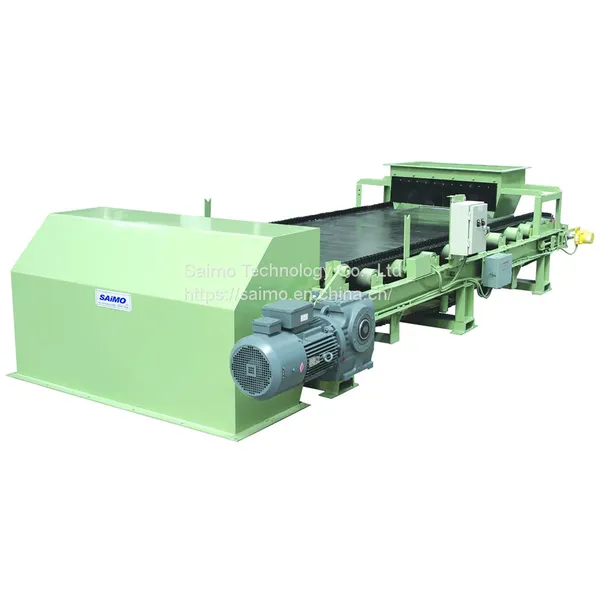
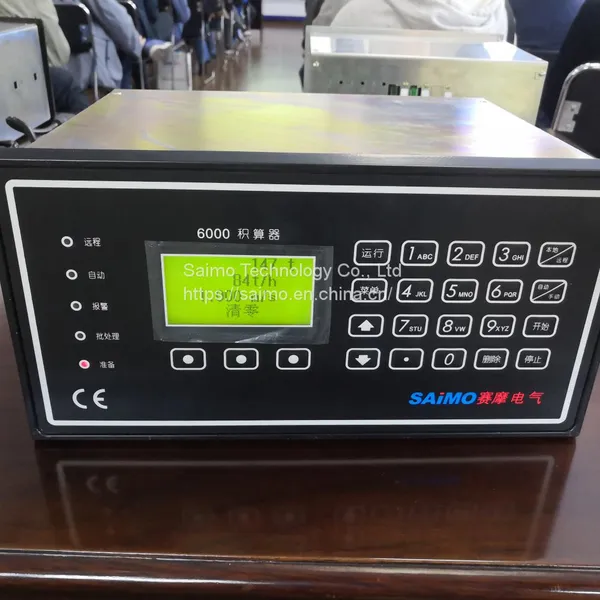
Saimo Feeder Controller Weighing Controllers 6105/6105B FH-02-6000PNegotiableMOQ: 1 Piece
-
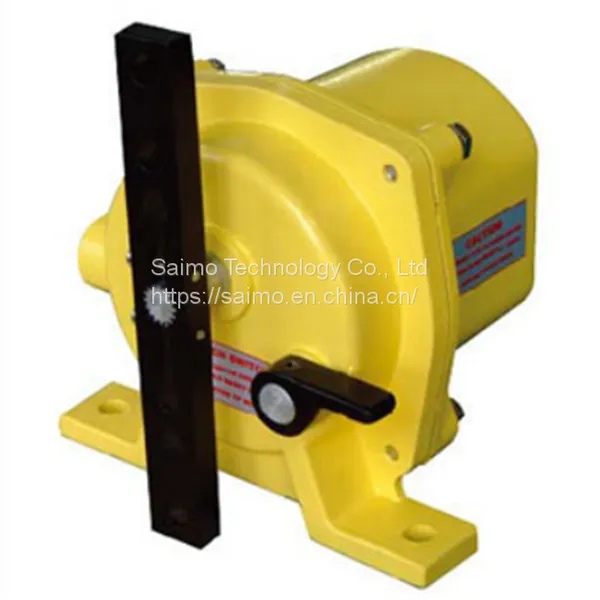
SAIMO Electronic PLR20-2D-J PL20 Safety Pull Switches Conveyor ProtectionsNegotiableMOQ: 1 Piece
-
SAIMO Electronic Belt Misalignment Switch ROS-2D-FM RUN OFF SWITCHES EXtaIIICNegotiableMOQ: 1 Piece
-
Saimo 6301 Belt Scale Integrator 6301D Digitizer FH-03-6000FNegotiableMOQ: 1 Piece
-
Saimo Speed Detector PLR12R/PLR12RN/PLR12RS Speed SensorNegotiableMOQ: 1 Piece
-
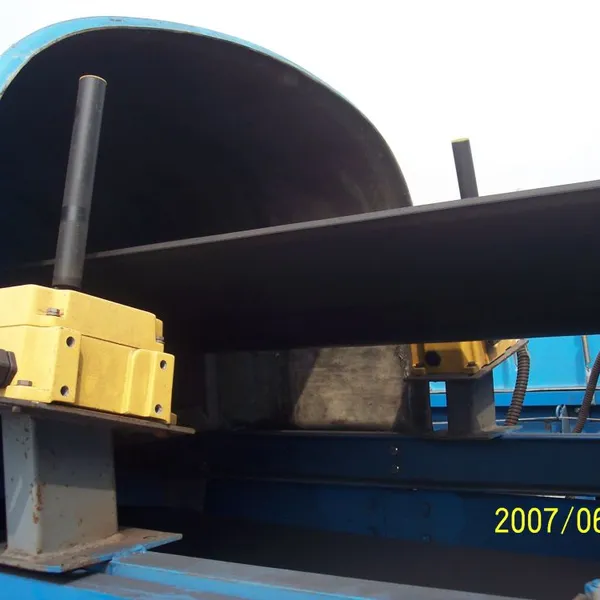
Saimo Technology ICS-FH-2 Belt ScaleNegotiableMOQ: 1 Piece
-
SAIMO F57 Fluidized Bed Boiler Coal FeederNegotiableMOQ: 1 Combo
-
SAIMO Automatic Truck Sampler Auger Sampling Systems Coal SamplesNegotiableMOQ: 1 Combo
-
SAIMO F55 Pressure-Tolerant Weighing Coal FeederNegotiableMOQ: 1 Combo
-
Saimo Feeder Controller Belt Integrator6001/6001B FH-10-6000FNegotiableMOQ: 1 Piece
-
Saimo Technology PL50 Belt Damage Detector PLR50NegotiableMOQ: 1 Piece
-
Saimo's Auger Type Sampling Systems AUGER SAMPLING SYSTEM FOR TRUCKNegotiableMOQ: 1 Set
-
Saimo's Model S76 Sampling UnitNegotiableMOQ: 1 Set
-
SAIMO ICS-FH-16 High Precision Belt ScaleNegotiableMOQ: 1 Combo
-
Saimo 6101 Belt Scale Integrator 6000 Integrator FH-10T-6000FNegotiableMOQ: 1 Piece
-
Saimo Technology Tilt Switch Probe Model PLR30M-FM EXta IIICNegotiableMOQ: 1 Piece