
 Business License
Saimo Technology: A 30-Year Journey in Bulk Material Weighing
Behind every bulk handling operation that runs on trustworthy numbers is a company that spent decades learning how to produce those numbers. For Saimo Technology Co Ltd, that learning began in 1996 in Xuzhou, in China's Jiangsu province, and it has shaped the company into a manufacturer of belt scales, weighing feeders, and load cells for industries around the world.
This article tells the company's story the way customers experience it: through the products, the engineering, and the manufacturing capability that stand behind each instrument. It is an account of what the company is, based on facts rather than claims.
If you are evaluating a weighing equipment supplier, this is the background you need to understand who you would be working with.
1. Origins in Bulk Material Measurement
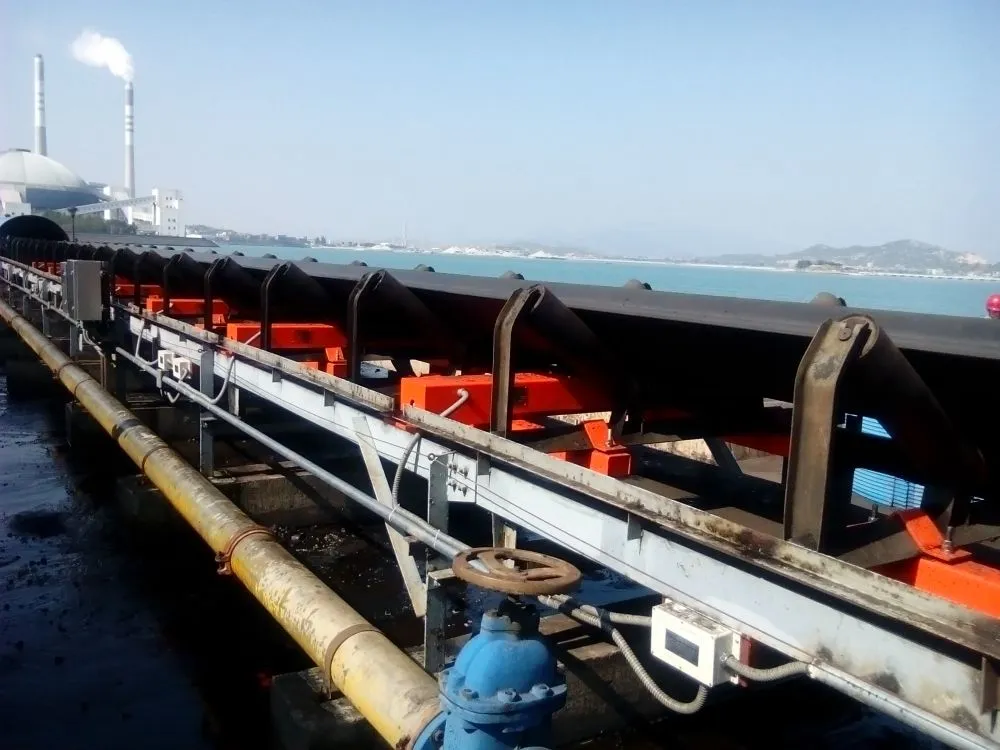
Saimo Technology was founded in 1996, at a time when China's bulk material industries were scaling up and needed measurement that could keep pace with high-volume production. The company set out to build weighing instruments for the conveyors and feeders that move coal, ore, cement raw materials, and other bulk solids.
From the beginning, the focus was on dynamic weighing, the measurement of material while it moves. That is a harder problem than static weighing, and it became the technical foundation the company built on for the next three decades.
Choosing that focus shaped everything that followed, because the skills needed for accurate conveyor weighing are specialized and accumulate slowly through real installations.
Dynamic weighing is unforgiving in a way static weighing is not. The material never stops, the belt flexes, tension changes with load, and the environment is rarely clean. Learning to measure accurately through all of that is not a matter of a single breakthrough but of thousands of installations, each adding a little to the understanding of how a scale behaves in the real world.
2. Becoming a Listed, Structured Enterprise
In 2015, Saimo Technology was listed on the Shenzhen Stock Exchange under stock code 300466. The listing marked a transition from a growing manufacturer to a structured, publicly accountable enterprise.
In 2016, the company completed a restructuring with Nanjing 3A Industrial, Wuhan Bosheng Information Technology, and Hefei Eagle Automation Engineering Technology. That move broadened the company's reach into intelligent management systems for raw materials and bulk material plants.
The restructuring is significant to customers because it shows the company operates as part of a larger group, with resources beyond a single product line. For a buyer, that means a supplier with staying power and a broader engineering base.
A publicly listed company also answers to disclosure and governance standards that private firms do not. That accountability is a quiet reassurance in a supply decision, because it means the company's claims about scale, ownership, and structure are a matter of public record rather than marketing.
3. A Product Line Built Around Weighing
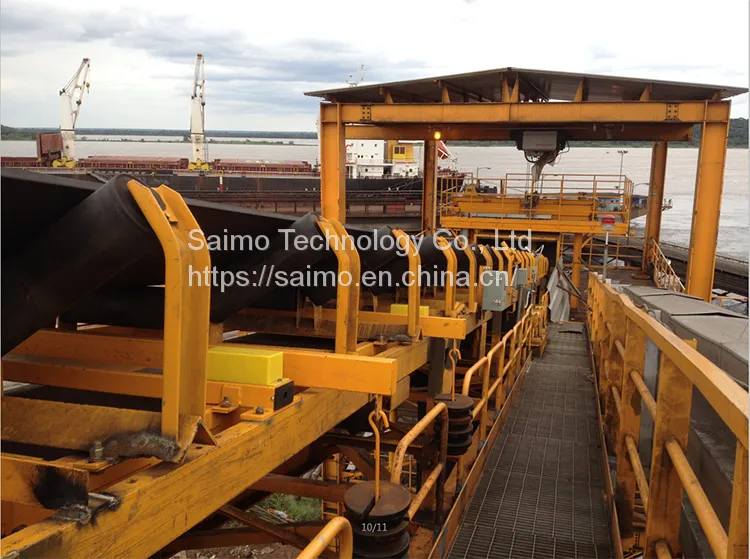
The company's core products are belt scales, coal weighing feeders, weighing feeders, and load cells. These are the instruments that measure and control bulk material flow, and they form a coherent family rather than a scattered catalog.
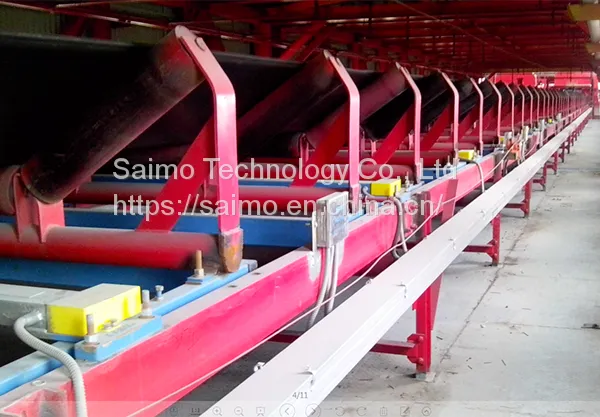
Belt scales measure material on existing conveyors. Coal weighing feeders and weighing feeders meter material into a process at a controlled rate. Load cells are the sensing element at the heart of all of them. Producing all four gives the company control over the entire weighing chain.
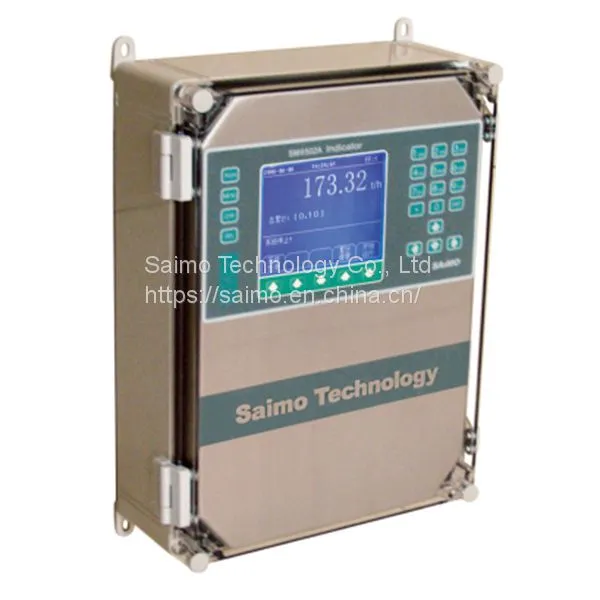
Around that core, Saimo also supplies weighing indicators and integrators, conveyor protection devices, and sampling systems. The supporting products exist to make the core weighing instruments work as a complete, reliable system.
Producing the full chain matters more than it first appears. When the weigh frame, the load cells, and the integrator come from the same manufacturer, they are designed to work together, and a problem can be diagnosed without arguing over which component is responsible. That single-source coherence is a practical advantage in both commissioning and long-term support.
4. Engineering Centers and Standards Work
The company operates two provincial-level research centers in Jiangsu province: an automatic weighing instrument engineering technology research center and a dynamic weighing engineering technology research center. It also maintains integrated bulk material testing centers in Xuzhou and Nanjing.
Those centers are where weighing technology is developed and verified. They give the company a place to test accuracy, stability, and long-term behavior in conditions that resemble real plants rather than laboratory ideals.
Saimo Technology is also a drafter of the national standard for electronic belt scales. That role means the company participates in defining the requirements the industry measures itself against, which is a position built on demonstrated technical depth rather than marketing.
Drafting a standard is a particular kind of recognition. It is not awarded by a marketing campaign; it is the result of being asked to contribute technical expertise to the rules that other manufacturers will have to meet. For a buyer, it signals that the company understands the measurement requirements at a level deeper than simply producing equipment.
5. Manufacturing Scale and Quality Systems
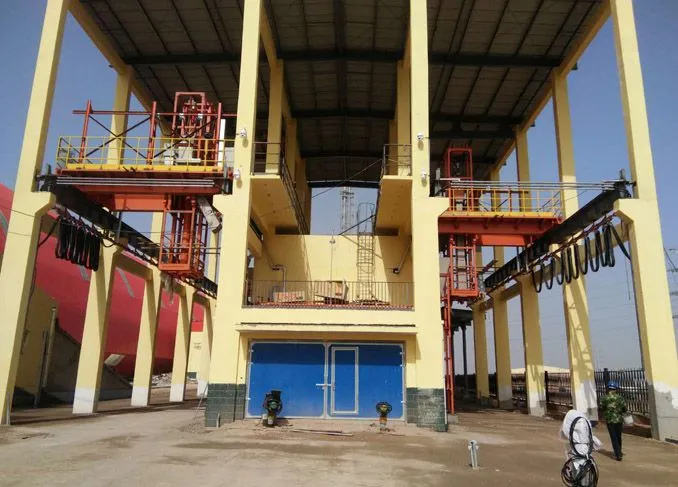
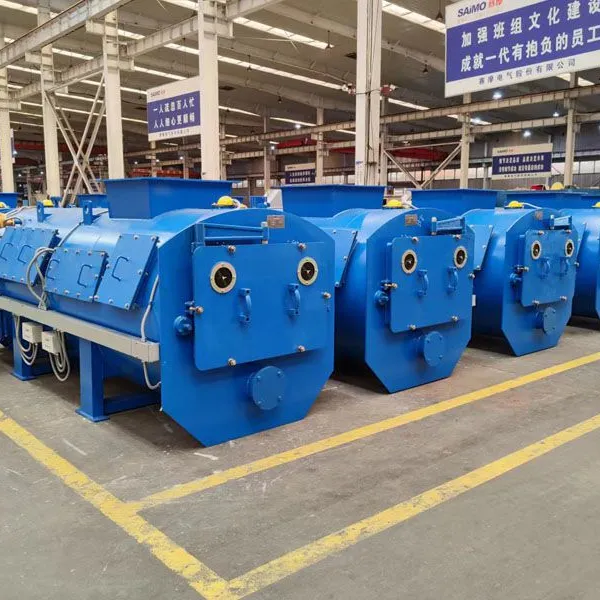
The company's factory covers more than 100,000 square metres, and the workforce exceeds 1,000 people, including sales staff and quality inspectors. That scale allows the company to produce instruments in volume while maintaining control over the manufacturing process.
Within that workforce, the structure matters. More than 100 people work in sales, and a dedicated quality inspection team handles verification. The mix of production, engineering, sales, and quality staff means the company can carry a project from specification through manufacturing to delivery without losing continuity.
Quality is managed through a full-process approach that covers raw material inspection, component testing, assembly monitoring, and finished-product calibration. The company holds certifications including ISO9001 and ISO10441.
That full-process approach is the difference between checking quality at the end and building it in at every stage. Raw materials are inspected before they enter production, components are tested before assembly, the assembly itself is monitored, and each finished instrument is calibrated before it leaves. By the time a belt scale reaches a customer, it has been verified at several points rather than trusted to a single final check.
For a buyer, this matters in a practical way. A manufacturer with its own testing centers and a documented quality system can verify a belt scale's accuracy before it ships, rather than discovering the truth on the customer's conveyor.
6. Stability as the Defining Technical Goal
The company's technical emphasis has been on stability, not just peak accuracy. A belt scale that is accurate on the day it is installed but drifts afterward is of limited value, so the engineering goal has been to hold accuracy over the long term.
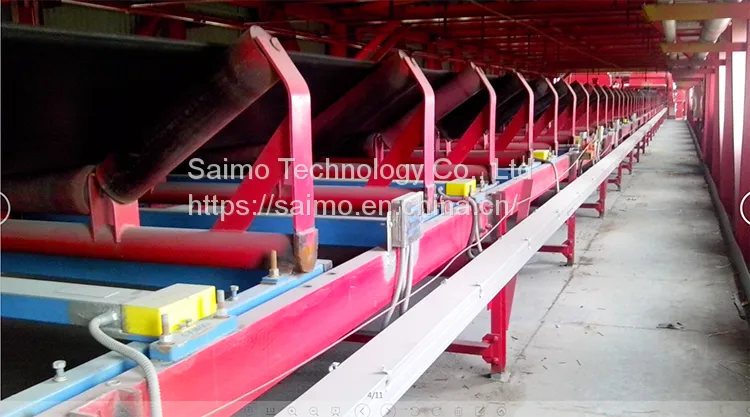
Saimo's belt scales are designed around techniques such as position-difference-based dimensional stabilization, material-stacking self-calibration, and free-floating balance weighing structures. These are engineering methods aimed at keeping the reading steady as conditions change.
The result is equipment that maintains a stable accuracy level over time, which is the quality a plant's monthly reconciliation actually depends on. This focus on stability is a direct expression of what the company has learned in three decades.
The techniques are worth understanding in plain terms. Dimensional stabilization keeps the weigh frame's geometry constant, so the load transfer does not change with temperature or stress. Self-calibration using material stacking gives the scale a way to check itself against real product.
A free-floating balance structure isolates the measured section from the surrounding conveyor. Working together, these methods address the everyday forces that would otherwise pull a reading off over time.
7. Export Experience and Global Reach
The company ships from Shanghai port and serves customers across a wide geography, including North America, South America, Europe, Southeast Asia, Africa, Oceania, the Middle East, and South Asia, as well as its domestic market.
Export experience matters because it tests a company's ability to meet different standards, voltages, and regulatory expectations. A manufacturer that has supplied weighing equipment to many regions has already worked through the practical issues of international delivery and support.
That experience is also reflected in how the company handles documentation, packaging, and after-sales communication, which are the parts of an export order that determine whether the equipment arrives and performs as expected.
Shipping from Shanghai port gives the company access to a major international gateway, which simplifies logistics for overseas customers. A supplier with an established export routine has already worked through customs documentation, seaworthy packaging, and the communication rhythm that keeps a distant project on track, and those operational details are as important as the product itself.
8. Two Examples of What This Background Produces
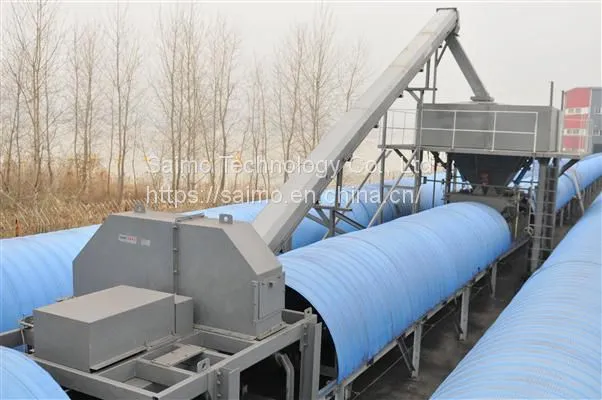
The company's history is most clearly judged by what its equipment does in the field. The examples below reflect the kind of applications Saimo serves, described in general terms rather than as accounts of specific named customers.
In one case, a power plant measuring coal feed relied on a coal weighing feeder supplied by Saimo Technology to hold a set delivery rate through changing fuel conditions. The plant reported steadier combustion and less manual correction after the gravimetric feeder was installed, a result that traced back to the closed-loop weighing design the company has refined over many installations.
In another, a cement operation fitted a Saimo belt scale to a limestone conveyor and began reconciling raw material intake against clinker output with far less variance than before. The scale's long-term stability meant the plant could trust the total without constant recalibration, which is the practical payoff of the company's emphasis on stable measurement.
These are the kinds of outcomes that a thirty-year record produces, and they come from the same place: equipment designed to hold its measurement in the conditions where bulk material actually moves, and a company that has learned what those conditions demand.
9. What This Means When You Choose a Supplier
When you choose weighing equipment, you are choosing the engineering, the manufacturing, and the support that stand behind it. A thirty-year history, a listed-company structure, provincial research centers, and a role in drafting the national standard are facts that describe the depth behind the product.
Those facts translate into practical confidence. You are buying from a company that has built weighing instruments for decades, verifies them in its own testing centers, and has delivered them to markets across the world.
Confidence in a supplier, in the end, is confidence that the equipment will arrive, perform, and keep performing. A history of installations, a manufacturing base with testing capability, and a role in setting the standard are the concrete things that build that confidence, far more than any single claim could.
Saimo Technology invites you to evaluate the company on that record, and to ask the detailed questions that a serious weighing project deserves. The equipment, and the team behind it, are ready for that scrutiny.
10. Frequently Asked Questions
10.1 When was Saimo Technology founded and where is it based?
Saimo Technology Co Ltd was founded in 1996 and is based in Xuzhou, in Jiangsu province, China. The company is a manufacturer of belt scales, coal weighing feeders, weighing feeders, and load cells, and it is listed on the Shenzhen Stock Exchange under stock code 300466. Its main production and testing facilities are located in the region around Xuzhou and Nanjing.
10.2 What industries does Saimo Technology serve?
The company supplies weighing and metering equipment to industries that handle bulk solids, including electric power, ports, chemicals, feed, metallurgy, building materials, and coal. Its instruments are used to measure material on conveyors and to meter material into processes, and the company has export experience across many regions in addition to its domestic market.
10.3 What is the company's approach to quality?
Saimo Technology manages quality through a full process that covers raw material inspection, component testing, assembly monitoring, and finished-product calibration. The company holds certifications including ISO9001 and ISO10441, operates provincial research and testing centers, and is a drafter of the national standard for electronic belt scales. Each instrument is calibrated before delivery.
10.4 Why does the company emphasize long-term stability?
Because accuracy that fades after installation has little value in a real plant. Saimo's engineering focuses on keeping a belt scale's measurement stable over time, through frame design and techniques aimed at rejecting vibration, tension changes, and material buildup. A stable measurement is what a plant's inventory, billing, and process control actually depend on month after month.
Recently Posted
-
Coal Weighing Feeders in Power Plants: How Fuel Feed Control Keeps Combustion on Target
September 1, 2026In a coal-fired power plant, the journey from bunker to burner begins with a single piece of equipment that decides how much fuel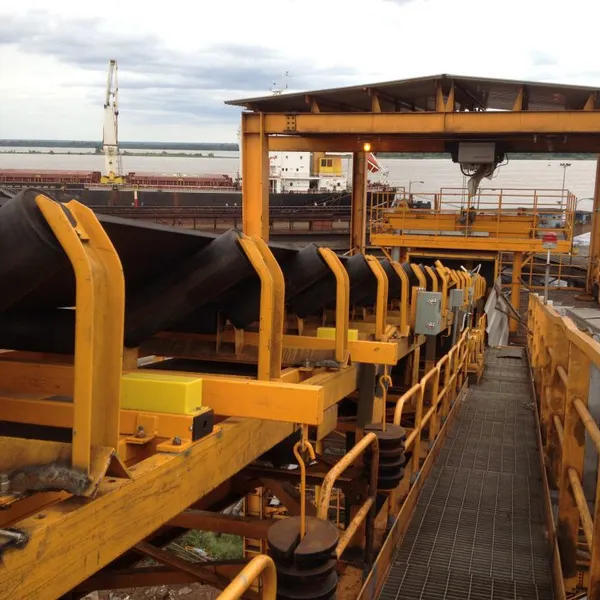 Read More
 -
Belt Scale Accuracy Standards: OIML R50 and What the Classes Really Mean
August 31, 2026A purchaser who asks for "a 0.5% belt scale" without stating the standard is comparing prices against a number that has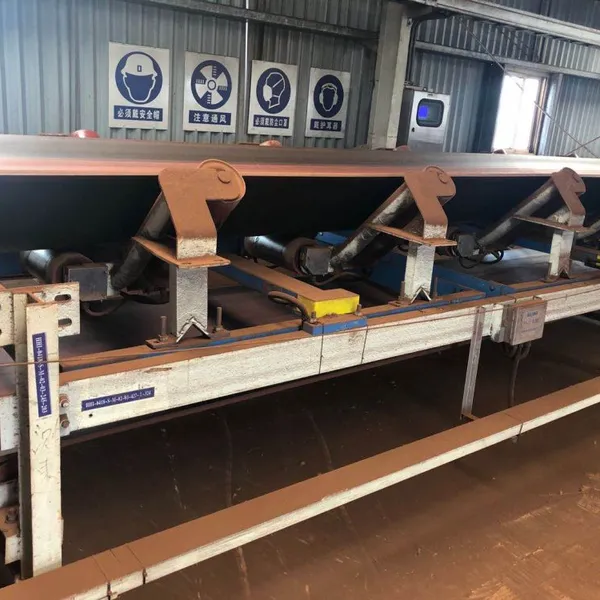 Read More
 -
How to Choose a Coal Weighing Feeder: A Buyer's Guide for Reliable Fuel Metering
August 28, 2026A coal feeder that meters fuel at the wrong rate does not announce itself with a loud failure. It delivers a slightly lean or rich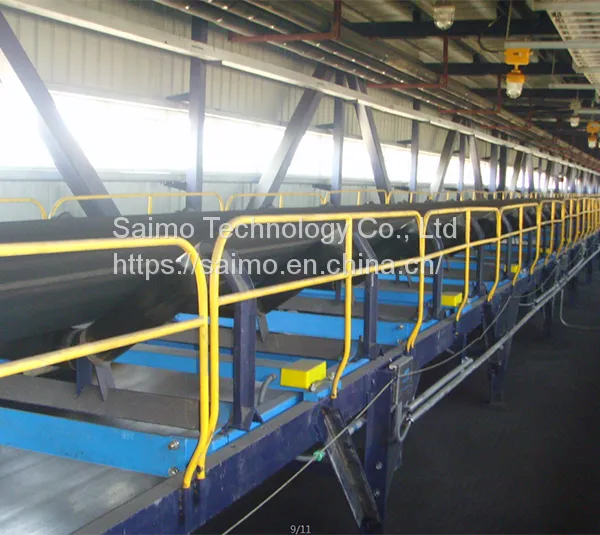 Read More
 -
Belt Scale vs Weighing Feeder: Which One Do You Need for Bulk Material Handling
August 27, 2026A plant that buys a weighing feeder when it really needed a belt scale, or the other way around, often does not notice the mismatc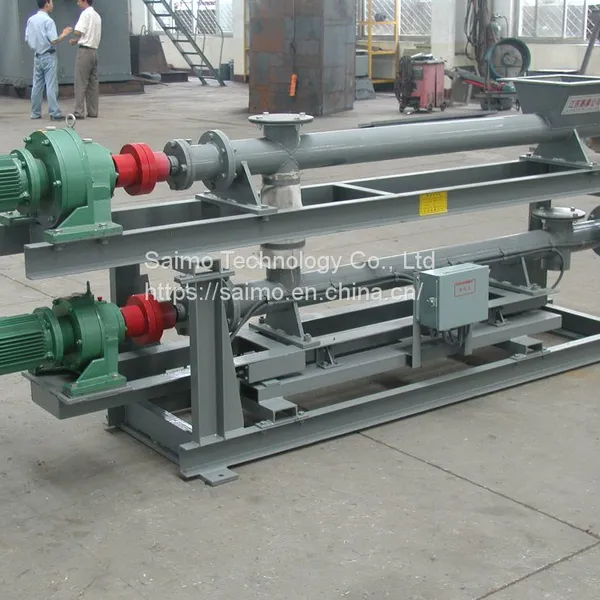 Read More

Contact Us
Recommended Products
-
 SAIMO Automatic Train Sampler Auger Sampling Systems Coal SamplesNegotiableMOQ: 1 Combo
 -
Saimo's Model S70 Sweep Type Sampling Machine Sampling SystemNegotiableMOQ: 1 Set
-
SAIMO Pressure-resistant Gravimetric Coal Feeder, Model F55NegotiableMOQ: 1 Piece
-
Saimo F52 Mid Range Weigh Belt Feeder System Weighing FeederNegotiableMOQ: 1 Piece
-
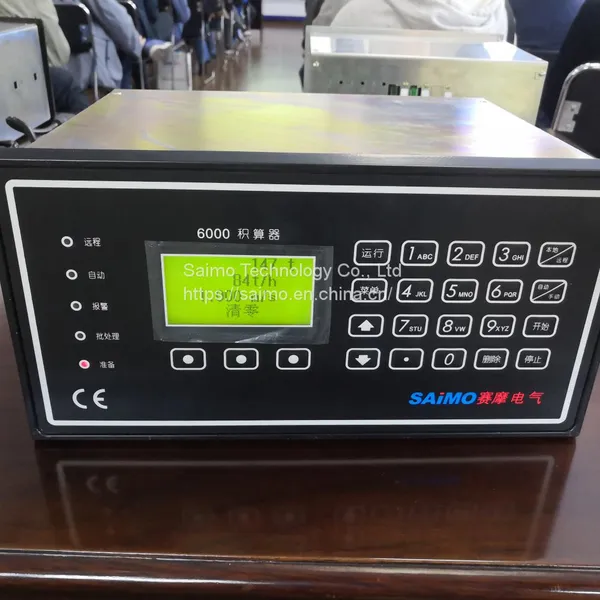
Saimo Feeder Controller Weighing Controllers 6105/6105B FH-02-6000PNegotiableMOQ: 1 Piece
-
SAIMO Electronic PLR20-2D-J PL20 Safety Pull Switches Conveyor ProtectionsNegotiableMOQ: 1 Piece
-
SAIMO Electronic Belt Misalignment Switch ROS-2D-FM RUN OFF SWITCHES EXtaIIICNegotiableMOQ: 1 Piece
-
Saimo 6301 Belt Scale Integrator 6301D Digitizer FH-03-6000FNegotiableMOQ: 1 Piece
-
Saimo Speed Detector PLR12R/PLR12RN/PLR12RS Speed SensorNegotiableMOQ: 1 Piece
-
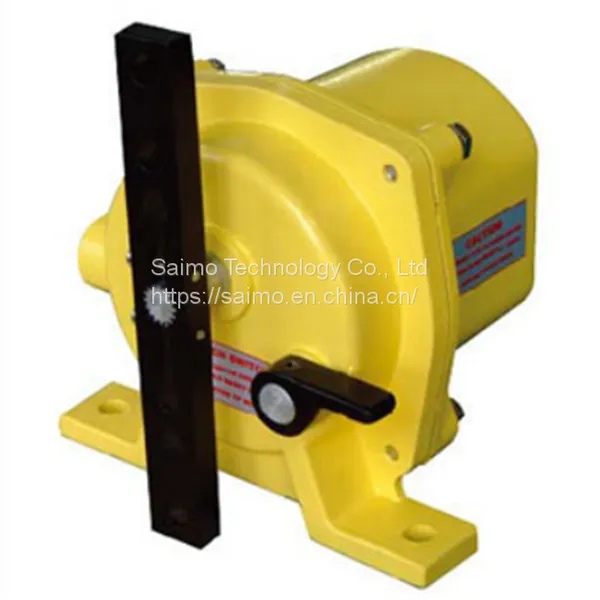
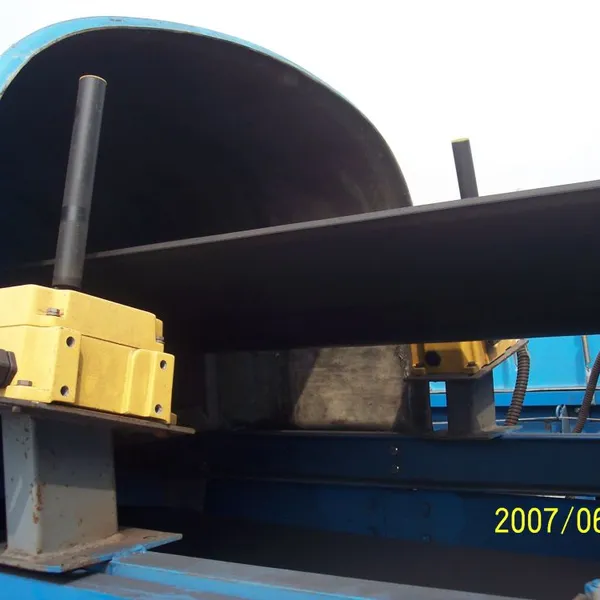
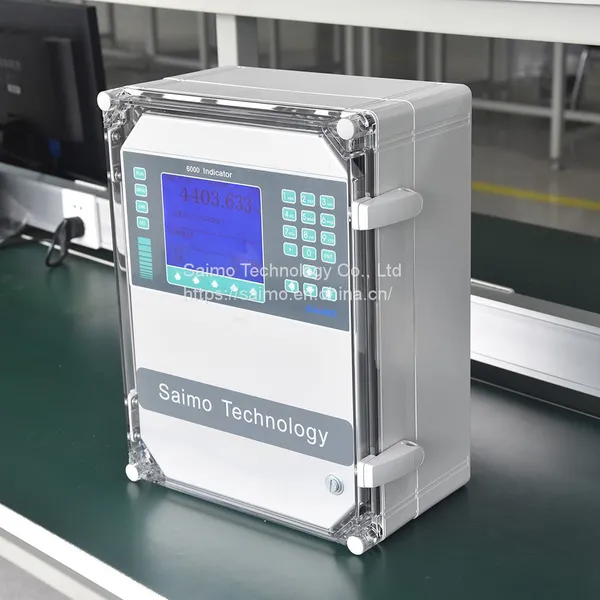
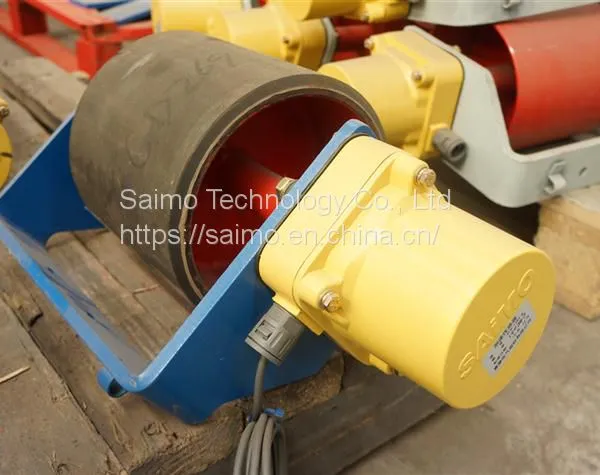
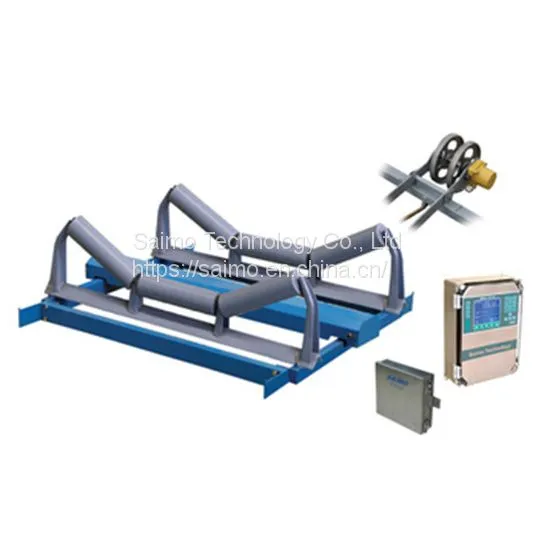
Saimo Technology ICS-FH-2 Belt ScaleNegotiableMOQ: 1 Piece
-
SAIMO F57 Fluidized Bed Boiler Coal FeederNegotiableMOQ: 1 Combo
-
SAIMO Automatic Truck Sampler Auger Sampling Systems Coal SamplesNegotiableMOQ: 1 Combo
-
SAIMO F55 Pressure-Tolerant Weighing Coal FeederNegotiableMOQ: 1 Combo
-
Saimo Feeder Controller Belt Integrator6001/6001B FH-10-6000FNegotiableMOQ: 1 Piece
-
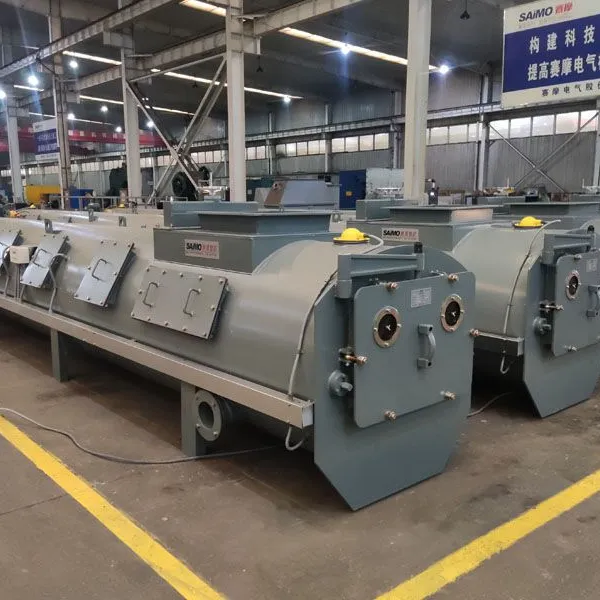
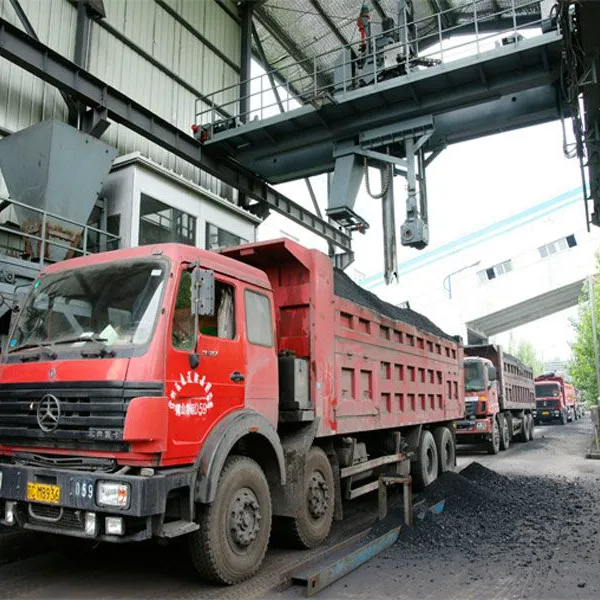
Saimo Technology PL50 Belt Damage Detector PLR50NegotiableMOQ: 1 Piece
-
Saimo's Auger Type Sampling Systems AUGER SAMPLING SYSTEM FOR TRUCKNegotiableMOQ: 1 Set
-
Saimo's Model S76 Sampling UnitNegotiableMOQ: 1 Set
-
SAIMO ICS-FH-16 High Precision Belt ScaleNegotiableMOQ: 1 Combo
-
Saimo 6101 Belt Scale Integrator 6000 Integrator FH-10T-6000FNegotiableMOQ: 1 Piece
-
Saimo Technology Tilt Switch Probe Model PLR30M-FM EXta IIICNegotiableMOQ: 1 Piece